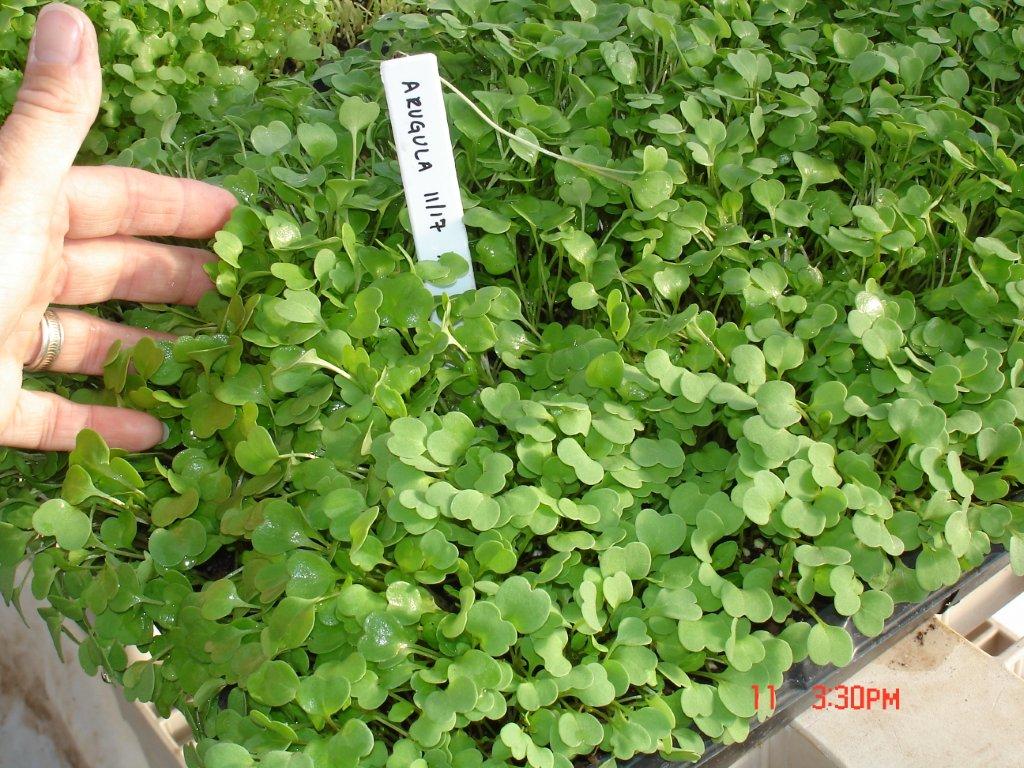
Here at Emmadale we’ve been exploring the potential of producing microgreens through the winter in our greenhouse. It’s been a great test with amazing results, but we are definitely feeling the shortness of winter days and now trying to figure out how to make sure our seeds germinate despite the loss of sun during the day and recent extra-cold temperatures.
Before we get into the challenges, let me introduce the microgreen. Basically, you can grow any lettuce, salad green, or herb as a microgreen. You could start with a pre-packaged seed mix, look for specific microgreen mixes, or simply choose a mesclun mix to grow as microgreens. A few popular varieties to grow as microgreens:
- Mustard
- Kale
- Endive
- Arugula
- Beet greens
- Spinach
- Radish greens
- Watercress
- Mizuna
- Peas
- Cabbage
- Basil
- any type of Lettuce
The best time to harvest microgreens is when they’ve developed their first set of true leaves (the first ones are seed leaves, and don’t look anything like the actual leaves of the plant), which is generally about ten days to two weeks after planting. Harvesting is as easy as snipping the sprout just above soil level. Seems pretty easy, eh?
Then let’s move on to the science. Seeds require three things to germinate and grow – temperature, moisture (humidity), and light. Our greenhouse normally maintains an acceptable temperature range for growth, thanks to our clear, sunny Colorado days. [Although recently temperatures have been extremely cold, adding an additional challenge to the mix.] We are able to maintain moisture with daily watering and management. Light has become our limiting factor. Or so we first suspected. Our microgreen crop started out with amazing success – more flats than we could sell, and now we’ve found enough local interest to sell out our harvest. Over the solstice, however, seed germination started to lag, and we at first attributed this to the shortest days of the year. With a little research, its becoming apparent that artificial lighting may be necessary to keep the little suckers going.
The second challenge, temperature, is starting to seem like more of the source of stunted growth. In order to actually germinate, light should not be as much of a factor. As soon as seeds sprout, however, they rely on having a certain amount of light per day, as well as somewhat consistent temperatures in order to grow. This bit from www.successwithseed.org helps to explain…
“Once your seed have germinated, the seedlings must have light. Light is necessary for plants to convert water and carbon dioxide into sugar (which plants use as food), in a process known as photosynthesis. If light intensity is too low, which often happens during the short days of winter or during prolonged cloudy periods, the plants will be unhealthy, tall and spindly. Plants have the greatest need of intense light when they are seedlings than at any other stage of life. When starting your seed indoors, using fluorescent lights or growing in a greenhouse is best, but if you do not have these available, an unshaded south window will suffice.”
We are obviously beyond using south-facing windows for this level of production – do we invest in artificial lighting? I asked a fellow Colorado microgreen grower about the situation. His response?
“Yes you are correct – healthy microgreens should be grown under lights a minimum of 12 hours per day. You do not need fancy lights just two 40 watt grow lights and a shelf to hang and set growing trays on. Your set up should take a bit of water in your area.”
In addition, the Colorado State University website has endless resources and information on horticulture and plant growth. Their page on light effects on plant growth can be seen here. Again, they suggest that “when starting transplants indoors, generally give plants 12 to 14 hours of light per day.”
Ok, our suspicions confirmed. Light will positively help. Now what about the effect of temperature? As of a few weeks ago, temperatures were relatively mild for our winter here in the Valley. Recently, however, we’ve entered an extreme cold cycle. The fluctuation in the greenhouse is far too much for tender seedlings to handle. Again, the CSU extension website has a great page explaining the effect of temperature on plant growth. Read about it here. Basically, the below zero nights are bringing the greenhouse temperature just too low to sustain the tender little greens. Do we add a source of heat? At what point is the energy input required to maintain these plants no longer worth the return?
Growing food in the Valley is a challenge, but it is one that we are having fun with and hope to succeed in year round. Any suggestions and knowledge are welcome – please let us know your thoughts, experiences or ideas!