Daffodils

Orange Emperor Tulips and Narcissus 'Goblet'

Spring in the Rockies!  Nothing is more welcome than a burst of color after a white, snowy winter.

Unfortunately, deer love to eat tulips!  They don’t touch the narcissus (nor do gophers, moles, or voles) because they are poisonous.

We use a liquid deer repellant called Deer Out that’s made from natural ingredients and has a peppermint smell instead of the rotten egg smell of some others.  They say it won’t wash off, but I find we have to reapply after rains and at least every two weeks if it’s under irrigation.

Challenges of the Greenhouse in Winter

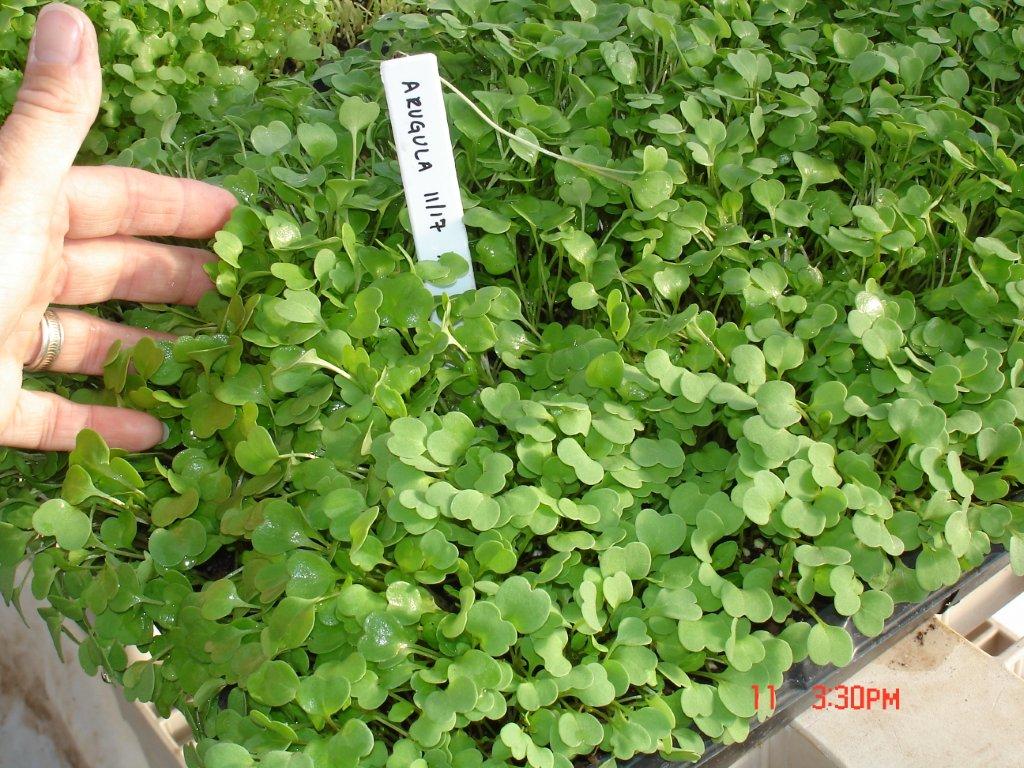
Here at Emmadale we’ve been exploring the potential of producing microgreens through the winter in our greenhouse. It’s been a great test with amazing results, but we are definitely feeling the shortness of winter days and now trying to figure out how to make sure our seeds germinate despite the loss of sun during the day and recent extra-cold temperatures.

DSC03888

Before we get into the challenges, let me introduce the microgreen. Basically, you can grow any lettuce, salad green, or herb as a microgreen. You could start with a pre-packaged seed mix, look for specific microgreen mixes, or simply choose a mesclun mix to grow as microgreens. A few popular varieties to grow as microgreens:

  • Mustard
  • Kale
  • Endive
  • Arugula
  • Beet greens
  • Spinach
  • Radish greens
  • Watercress
  • Mizuna
  • Peas
  • Cabbage
  • Basil
  • any type of Lettuce

The best time to harvest microgreens is when they’ve developed their first set of true leaves (the first ones are seed leaves, and don’t look anything like the actual leaves of the plant), which is generally about ten days to two weeks after planting. Harvesting is as easy as snipping the sprout just above soil level. Seems pretty easy, eh?

Then let’s move on to the science. Seeds require three things to germinate and grow – temperature, moisture (humidity), and light. Our greenhouse normally maintains an acceptable temperature range for growth, thanks to our clear, sunny Colorado days. [Although recently temperatures have been extremely cold, adding an additional challenge to the mix.]  We are able to maintain moisture with daily watering and management. Light has become our limiting factor. Or so we first suspected. Our microgreen crop started out with amazing success – more flats than we could sell, and now we’ve found enough local interest to sell out our harvest. Over the solstice, however, seed germination started to lag, and we at first attributed this to the shortest days of the year. With a little research, its becoming apparent that artificial lighting may be necessary to keep the little suckers going.

The second challenge, temperature, is starting to seem like more of the source of stunted growth. In order to actually germinate, light should not be as much of a factor. As soon as seeds sprout, however, they rely on having a certain amount of light per day, as well as somewhat consistent temperatures in order to grow. This bit from www.successwithseed.org helps to explain…

“Once your seed have germinated, the seedlings must have light. Light is necessary for plants to convert water and carbon dioxide into sugar (which plants use as food), in a process known as photosynthesis. If light intensity is too low, which often happens during the short days of winter or during prolonged cloudy periods, the plants will be unhealthy, tall and spindly. Plants have the greatest need of intense light when they are seedlings than at any other stage of life. When starting your seed indoors, using fluorescent lights or growing in a greenhouse is best, but if you do not have these available, an unshaded south window will suffice.”

We are obviously beyond using south-facing windows for this level of production – do we invest in artificial lighting? I asked a fellow Colorado microgreen grower about the situation. His response?

“Yes you are correct – healthy microgreens should be grown under lights a minimum of 12 hours per day. You do not need fancy lights just two 40 watt grow lights and a shelf to hang and set growing trays on. Your set up should take a bit of water in your area.”

In addition, the Colorado State University website has endless resources and information on horticulture and plant growth. Their page on light effects on plant growth can be seen here. Again, they suggest that “when starting transplants indoors, generally give plants 12 to 14 hours of light per day.”

Ok, our suspicions confirmed. Light will positively help. Now what about the effect of temperature? As of a few weeks ago, temperatures were relatively mild for our winter here in the Valley. Recently, however, we’ve entered an extreme cold cycle. The fluctuation in the greenhouse is far too much for tender seedlings to handle. Again, the CSU extension website has a great page explaining the effect of temperature on plant growth. Read about it here. Basically, the below zero nights are bringing the greenhouse temperature just too low to sustain the tender little greens. Do we add a source of heat? At what point is the energy input required to maintain these plants no longer worth the return?

Growing food in the Valley is a challenge, but it is one that we are having fun with and hope to succeed in year round. Any suggestions and knowledge are welcome – please let us know your thoughts, experiences or ideas!


The Impact of Whole Foods on the Local Farmer

Well, the long-awaited Whole Foods store has opened in our area.  The Roaring Fork valley is about 45 miles long, and ranges from ½ mile to 1-1/2 miles wide.  The new market will serve probably 30,000 people from 6 or so incorporated communities plus unincorporated areas.  I would guess that the demographic layer cake is fed by a base layer of Hispanic immigrant workers who are tax payers, a little buttercream of the same who are not legal workers, another layer of fairly medium-income working Caucasians with fairly yuppie tastes, a little more buttercream of regular-old retirees,  a final layer of 2nd homeowners who have lots of financial buying power, all topped with a lovely ganache of the uber-wealthy who create the jobs for the rest of us and provide a stable market for arts, restaurants, and retail, and whose purchases fund our schools and government coffers alike.

The upshot is, probably 2/3 of the cake has been waiting for the chance to buy organically raised meats, fish, and dairy, organic vegetables, bulk nuts, seeds and twigs, and chomp on delectable, prepared foods from the upscale deli market.

The grand opening was a party, with locals greeting each other, sharing samples, oohing and aaahing, and generally being thrilled at the first coming of fancy market!

I confess that I love the bulk food section and that big bin full of baked delectable right at eye level with guilt-free names like ‘Gluten-free honey almond raspberry bar’.

However, I am a farmer.   Yup, right here in River City, about 2 miles from the golden egg.  Some of my sales come from a Sunday market in the little town 5 miles from the new box, and some from direct farm to customer weekly sales.  I’m not yet ‘making A living’ at it, but I am trying to make MY living from it.

Perhaps it’s really because kids went back to school right about the week WF opened and no one wanted any more produce, but boy, sales went way down that week.  The farmers’ market seemed barren of all but the most dedicated supporters of local farmers for the next five weeks until the season end and no one, not one person, ordered any more veggies direct from my farm.

Hmmm.  Is it just a fad?  Were my veggies bad?  Were my prices too high?  I’ve got to do a survey and find out.  In my spare time.

Most everyone I have talked to says that they loved my food and the restaurants are still buying so I guess I’m not poisoning anyone.

I checked the produce section at WF and found my prices were either the same or not more than 1$  a pound more for any one thing.

Lots of people, really wanting to help out their local farmer said, ‘hey, you should sell your stuff at Whole Foods!’ So I inquired.  Initially enthusiastic at the prospect of buying truly local, the produce manager then informed me that they only buy ‘certified organic’.  Well, it’s another discussion but that certification is cumbersome, expensive and some people think rather meaningless since there aren’t the kind of follow up inspections you’d expect in food production and handling.  I grow organically, but I’m not ‘certified’.  So, no dice.  And, one more small detail—they pay farmers approximately .50 cents on the dollar compared to direct sales.

So if we’re talking about walking the walk (were we?) a person who buys ‘local’ produce from the big market is adding a middle man to the transaction, thereby reducing the amount of money in the farmers’ hands, while paying about the same money for the same stuff, only kept in the walk-in fridge another week and possibly disinfected to meet FDA standards for ‘retailing’ produce.  Many businesses, specialty organic markets included, contribute to social or environmental causes nationally and in their communities, but I’m guessing that at least some of that dough goes into marketing and maybe administration at corporate headquarters?

Competition is a good thing; I believe in it so that we don’t get stagnant, over-priced, or gain too much power.  But I am concerned with the impact of this retailer on my ability to sell enough radishes to pay my employees at least 50% more than WF pays its, and my ability to support my friends who are restauranteurs, retailers, doctors, tinkers and tailors.